Tsukiji or Toyosu? A practical guide to Tokyo's fish markets
Visitors often ask us which fish market to go to, and the honest answer is that they are two different experiences. Tsukiji is where you eat. Toyosu is where you watch the trade. The old wholesale market moved from Tsukiji to Toyosu in 2018, but the retail streets around the old site stayed, and that is the part most people mean when they say "Tsukiji" today.
The short version
- Want breakfast, snacks and street food? Go to Tsukiji Outer Market, mid-morning.
- Want to see the tuna auction? Go to Toyosu Market, very early, ideally with a lottery ticket for the lower viewing deck.
- Have one morning? Start at Toyosu around 5:30, then take the train back toward Ginza and finish at Tsukiji for a second breakfast once the stalls are fully open.
Both markets follow the wholesale calendar, which means they are closed or quiet on Sundays, national holidays and many Wednesdays. The exact pattern changes month to month, so check the official calendar before you plan around a specific day.
Tsukiji Outer Market: eat your way through
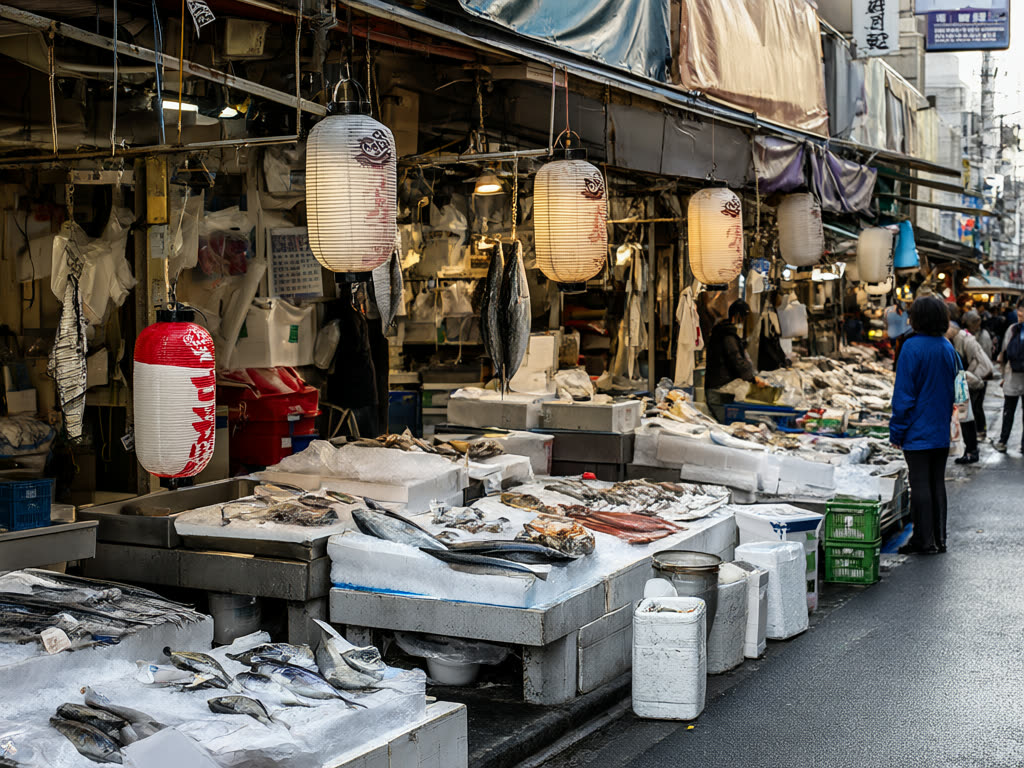
The outer market is a grid of narrow lanes packed with around 460 shops: fishmongers, knife makers, tea dealers, pickle shops, and small counters selling food you eat on the spot. It sits a short walk from Ginza. Tsukijishijo Station on the Toei Oedo Line and Tsukiji Station on the Tokyo Metro Hibiya Line are both a few minutes away. From Asakusa, the Toei Asakusa Line runs straight to Higashi-ginza, which is an easy walk.
When to go
Aim for roughly 9:00 to 13:00. Many shops open around breakfast time, the lanes are busiest by late morning, and a lot of stalls start packing up in the early afternoon. Some close as soon as they sell out. On market holidays a share of shops still open, but with shorter hours and less choice. A few eateries inside the Uogashi building open earlier than the rest, which is useful if you are coming straight from Toyosu.
What to eat
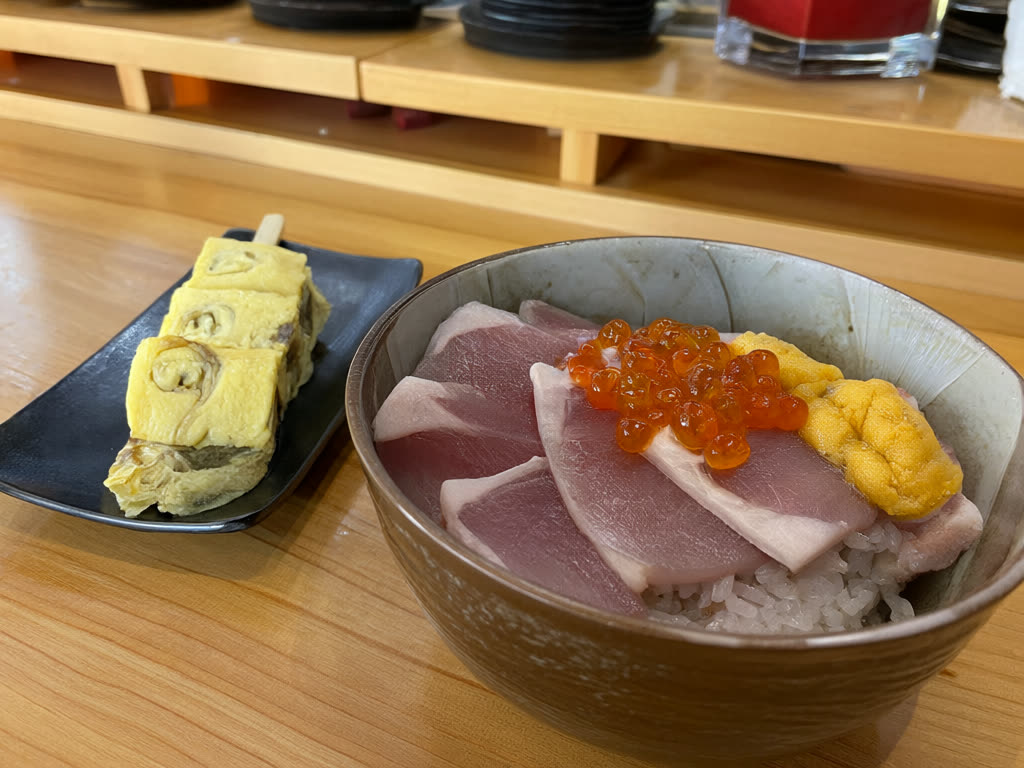
- Tamagoyaki. Sweet rolled omelette, sold on a stick or by the block. Several shops have been making it for generations, and it is a good first bite.
- Sushi or a seafood bowl for breakfast. Counters around the market serve set breakfasts of nigiri or kaisendon (raw fish over rice). Prices range widely, so read the board outside before you sit down.
- Grilled seafood. Scallops, prawns and eel grilled to order, often brushed with soy and butter.
- Tuna in every form. Lean tuna, fatty tuna, seared tuna on skewers, and tuna bowls at small food-court counters.
- Oysters and sea urchin. Seasonal and priced accordingly, usually sold by the piece.
- Something to take home. Dried bonito flakes, kombu, green tea, and kitchen knives are the classic buys. Knife shops will often engrave a name for you.
The local rules
Eating while walking is not allowed in the outer market. Eat at the counter or in the space in front of the shop where you bought the food, and hand your rubbish back to that shop, since public bins are almost nonexistent. The lanes are narrow and working vehicles still pass through, so keep large groups and luggage out of the way. Many stalls are cash only; bring more coins and ¥1,000 notes than you think you need.
Avoid the worst of the crowd. By 11:00 on a weekday the main lanes can be shoulder to shoulder. Arrive closer to opening and start with the side lanes, then work toward the busier corners.
Toyosu Market: watch the trade
Toyosu is a modern, enclosed complex on reclaimed land in Koto Ward. It is not a street market. Visitors walk along raised corridors and look down at the working floors through glass. It is cleaner and calmer than people expect, and it rewards an early start. Take the Yurikamome Line to Shijo-mae Station, which connects directly to the market buildings. The Yurikamome starts at Shimbashi and takes around half an hour.
The market is split into separate buildings connected by walkways. The Fisheries Wholesale Market Building is where the tuna auction happens. The Fisheries Intermediate Wholesale Market Building holds most of the restaurants and a shopping street for kitchen tools, dried goods and souvenirs. A third building handles fruit and vegetables and has its own viewing deck. There is also a rooftop garden with views across the bay. Visitor areas generally open at 5:00, and most of the action is over by late morning.
The tuna auction: two ways to see it
1. The lower viewing deck (by lottery). A small number of people each day, around 100, are allowed onto a deck close to the auction floor, separated only by a low barrier. Places are allocated by a free online lottery run through the official Toyosu Market website, not first come, first served. Applications usually open for a short window in the month before your visit, and you can list a few preferred dates. Results are sent by email, so check your spam folder. On the day you will need to arrive at the assembly point well before the auction starts and may be asked for photo ID, so bring your passport. Late arrivals can lose their place. The exact window, group size limit and check-in time are set on the official lottery page and change, so read it carefully when you apply.
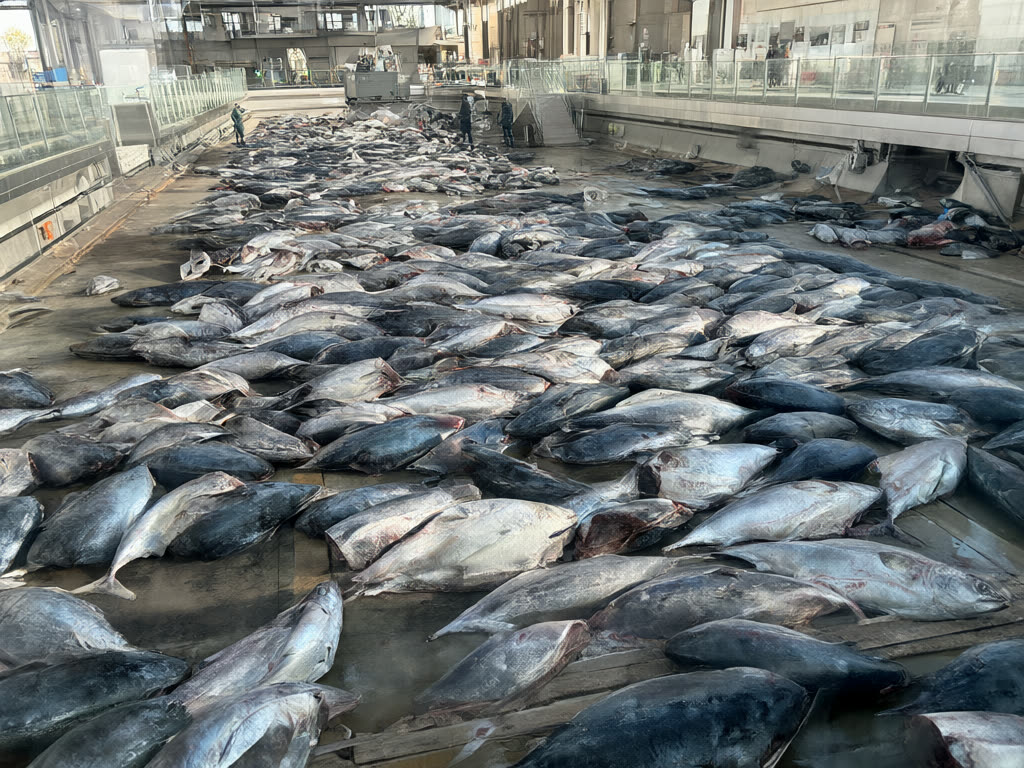
2. The upper gallery (no booking). If you do not win, you can still watch from an enclosed gallery one floor up, behind glass. It is free and opens around 5:00. The view is from further away and through a window, but you will still see the rows of frozen tuna, buyers checking the cut tail of each fish, and the auctioneers ringing bells and calling bids. Arrive early to get a spot at the glass.
The auction itself usually runs from around 5:30 to 6:30 and can be shorter on light days. If you arrive at 7:00 you will see an empty floor.
Do not pay for the lottery. The application is free. Ignore any site that charges you just to enter. Paid tours that include deck access do exist, but read what you are getting before you book.
What to eat at Toyosu
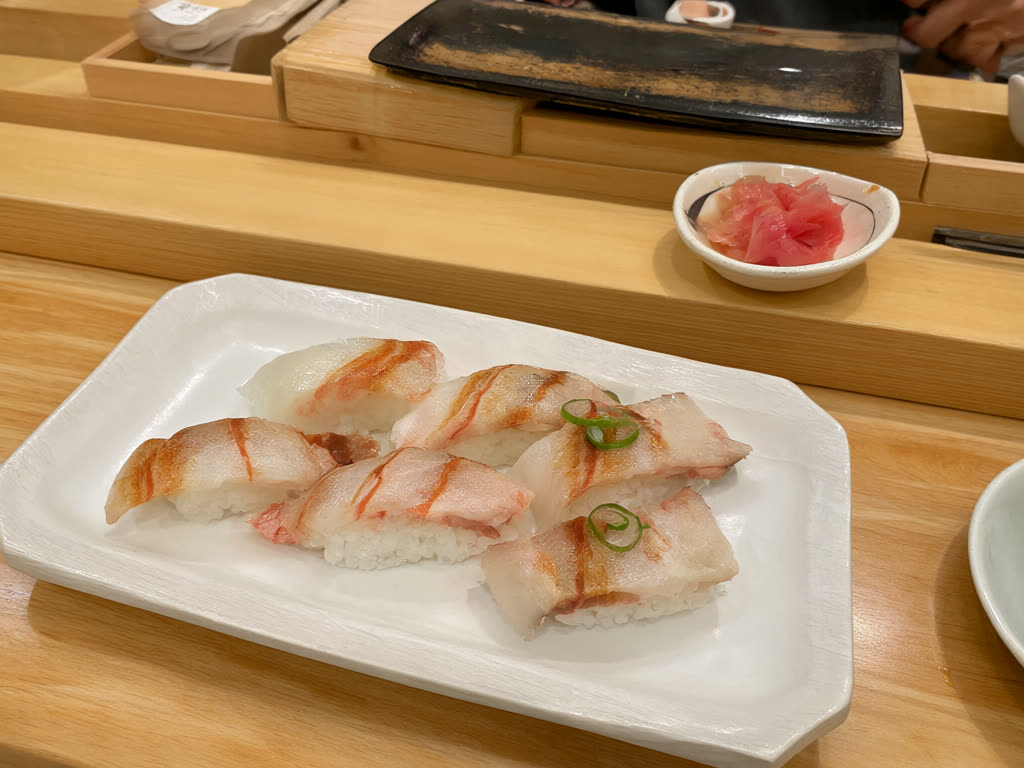
About 40 restaurants operate inside the market, most of them in the Intermediate Wholesale building and the management building. Sushi is the main draw, and the best-known counters can have long queues before dawn. Ramen, curry, tonkatsu and simple set meals are also available if you want a break from raw fish. Most restaurants keep market hours, opening early and closing by early afternoon, and many close on market holidays.
Next to the market is Toyosu Senkyaku Banrai, a separate food and hot spring complex that opened in 2024. It has dozens of seafood restaurants and snack stalls styled as an old Edo street, plus a rooftop footbath that is free to use. Its shops keep later hours and many stay open when the market itself is closed, which makes it a useful plan B on a Sunday.
Planning tips
- Check the calendar first. Both markets close on the same wholesale holidays. Planning a Toyosu visit for a Wednesday without checking is the most common mistake we see.
- Get there early, leave by noon. Neither market is an afternoon outing.
- Bring cash. Tsukiji especially. Toyosu restaurants are more likely to take cards, but not all do.
- Pack light. There is little space for suitcases at either market, and Tsukiji's lanes are tight. Use a station locker.
- Respect the working areas. At Toyosu, stay in the visitor zones and do not use flash on the glass. At Tsukiji, step aside for delivery carts.
If you are building a whole food day, pair this with our Tokyo ramen guide for lunch and izakaya and yokocho alleys for the evening. The three-day Tokyo itinerary shows how a market morning fits into a wider trip.
Check the market calendar on the way there
Market holidays, lottery result emails, the Yurikamome timetable and a map of narrow stall alleys: a fish market morning runs on your phone. Install an eSIM before you fly and you are online when you step off the plane.
Japan eSIM from ¥480