Shibuya and Harajuku in one day: the crossing, the shrine and the side streets
Shibuya, Harajuku and Omotesando sit next to each other on the west side of central Tokyo, close enough to walk between them in twenty minutes. Put them together with Meiji Jingu and you have a full day that moves from a quiet forest shrine to the busiest pedestrian crossing in the city. This guide explains the order we suggest, where to look at the crossing, and what is worth skipping.
A route that works
Start early at Meiji Jingu, walk south through Harajuku and down Omotesando, cut across to Shibuya by late afternoon, and stay for the crossing after dark. Going in this direction means the shrine is calm, the shopping streets have just opened when you reach them, and you arrive in Shibuya as the lights come on.
If you have a spare half day, Shimokitazawa is a short train ride from Shibuya and makes a good second afternoon. More on that below.
Morning: Meiji Jingu
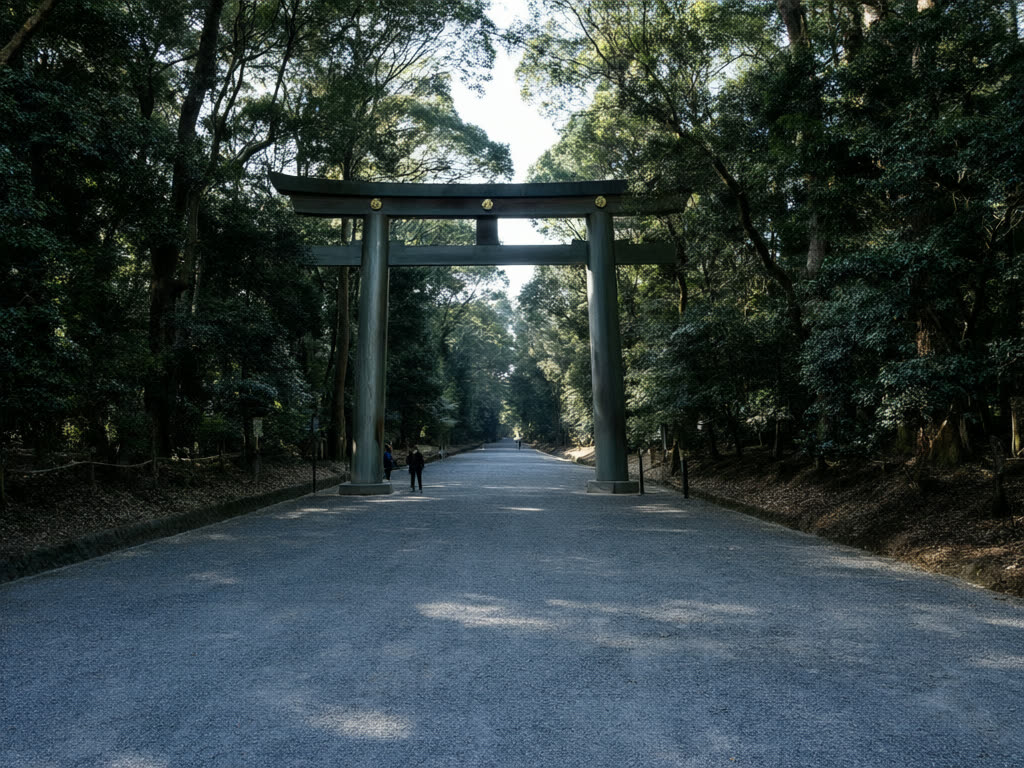
The shrine is dedicated to Emperor Meiji and Empress Shoken and sits in a large planted forest right next to Harajuku Station. Entry to the grounds is free, and the gates follow the sun: they open around sunrise and close around sunset, so closing time can be as early as 4 pm in winter. The shrine publishes a month-by-month table on its official site, which is worth checking if you plan to arrive late in the day.
From the station, the gravel approach takes around ten minutes to the main hall. You will pass the huge wooden torii gates and a wall of decorated sake barrels donated by brewers. At the main hall, the usual etiquette applies: bow at the torii, rinse your hands at the water basin if you like, and keep photos away from people praying.
A few areas inside the grounds, such as the inner garden and the museum, have their own opening hours and a separate fee. Most visitors are happy with the main approach and hall.
Go before 9 am. Tour groups arrive mid-morning. Early on, the forest path is almost silent, which is the whole point of coming.
Weddings. On weekends you may see a traditional wedding procession cross the courtyard. Watch from the side and do not block the path.
Late morning: Harajuku and Takeshita Street
Leave the shrine by the south gate and you are opposite Takeshita Street, a narrow pedestrian lane of crepe stands, character shops and youth fashion. It is fun for fifteen minutes and exhausting after an hour, especially on weekends, when the crowd moves at shuffling speed. Weekday mornings are much easier.
For something less frantic, walk the back streets known as Ura-Harajuku, east of Takeshita, and Cat Street, a car-free lane that runs south toward Shibuya. This is where the small independent clothing shops, vintage stores and cafes are. Most do not open until 11 am or noon.
Afternoon: Omotesando
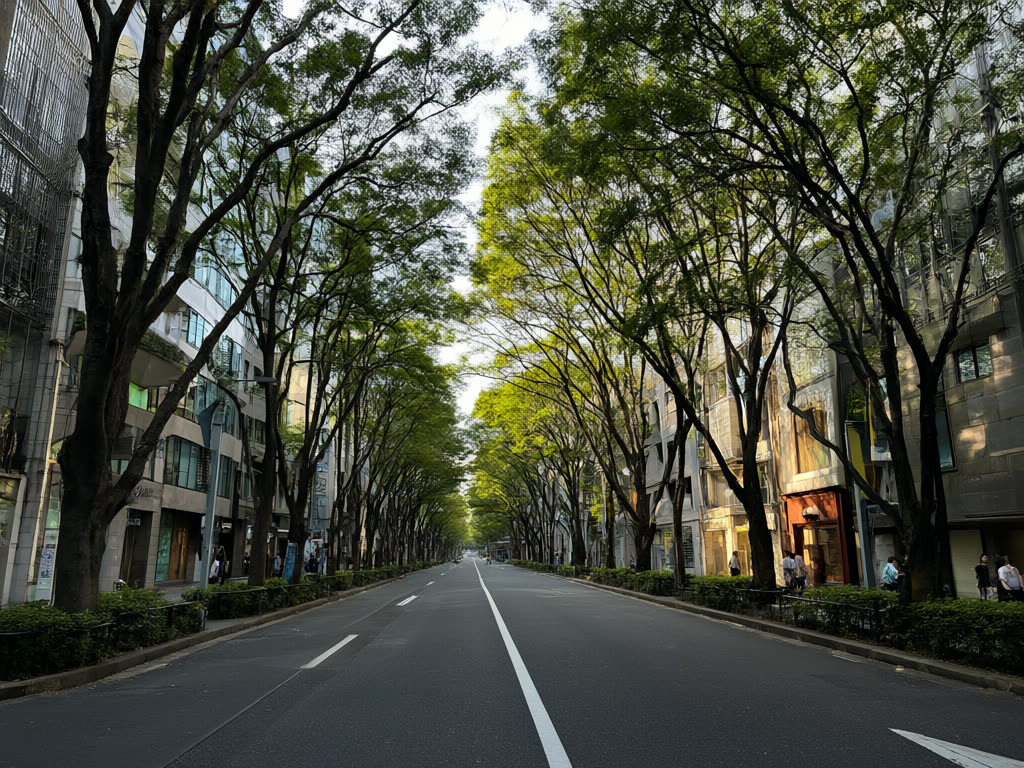
Omotesando is the wide, tree-lined avenue that runs from Harajuku Station toward Aoyama. It is lined with flagship stores whose buildings are as much the attraction as the shops, designed by well-known Japanese architects. You do not need to buy anything to enjoy it; walk one side down and the other back.
For a break, the side streets on both sides hide coffee shops, small galleries and lunch places that are quieter than the avenue itself. Omotesando Hills, the long low shopping complex on the north side, has an internal ramp that spirals around a central atrium and is worth a look even if you skip the shops.
From the bottom of Omotesando it is about a 15 minute walk to Shibuya, or two stops on the Ginza or Hanzomon line.
Evening: Shibuya Crossing
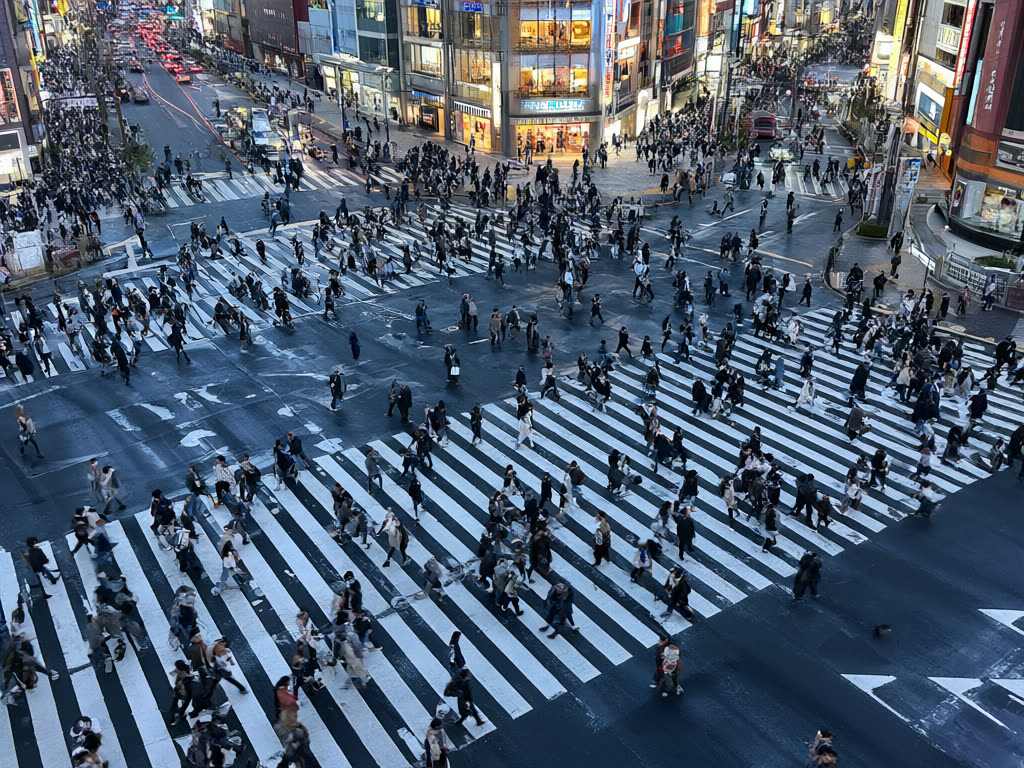
The scramble crossing outside Shibuya Station's Hachiko exit stops all traffic at once and lets pedestrians cross in every direction, including diagonally. It is worth doing twice: once at street level, walking across with the crowd, and once from above, where the pattern of people becomes clear.
Where to look from above
Free, indoors. The connecting walkway between the JR station and the Shibuya Mark City building has large windows facing the crossing. It is not high, but it is free and you can take your time. Shibuya Hikarie, the tall building on the east side of the station, has a public lobby on the 11th floor with a wider view over the area; it is a good rainy-day option.
Paid, close up. The rooftop of the MAGNET by Shibuya109 building, directly beside the crossing, looks straight down at it. Entry is paid and has included a drink in the past; check the current price before you go.
Paid, very high. Shibuya Sky, on top of Shibuya Scramble Square, is an open-air rooftop deck well above the crossing, with views as far as Mount Fuji on clear winter days. Entry is by timed ticket. Sunset slots sell out first, online tickets are cheaper than at the counter, and later slots cost more than daytime ones. Tickets are usually released a few weeks ahead; check the official site for the current window, prices and last entry. The rooftop closes in strong wind or rain, while the indoor floor below stays open. Loose items such as hats and large bags have to go in lockers before you go up.
Hachiko. The statue of the loyal dog is by the crossing exit and draws a queue for photos. Have a look, but there is no need to wait in line to stand next to it.
No drinking on the street at night. Shibuya Ward restricts drinking alcohol outdoors around the station at night, and the rules are enforced strictly around Halloween and New Year. Have your drink inside a bar or restaurant.
Eating in Shibuya
Shibuya has every kind of food, but the station area is dominated by chains. For more character, walk up Dogenzaka or into the lanes of Nonbei Yokocho, a short row of tiny bars along the railway tracks near the station. Our izakaya and yokocho guide explains how small bars and seat charges work, and the ramen guide covers ticket machines if you just want a quick bowl before heading back.
Add-on: Shimokitazawa
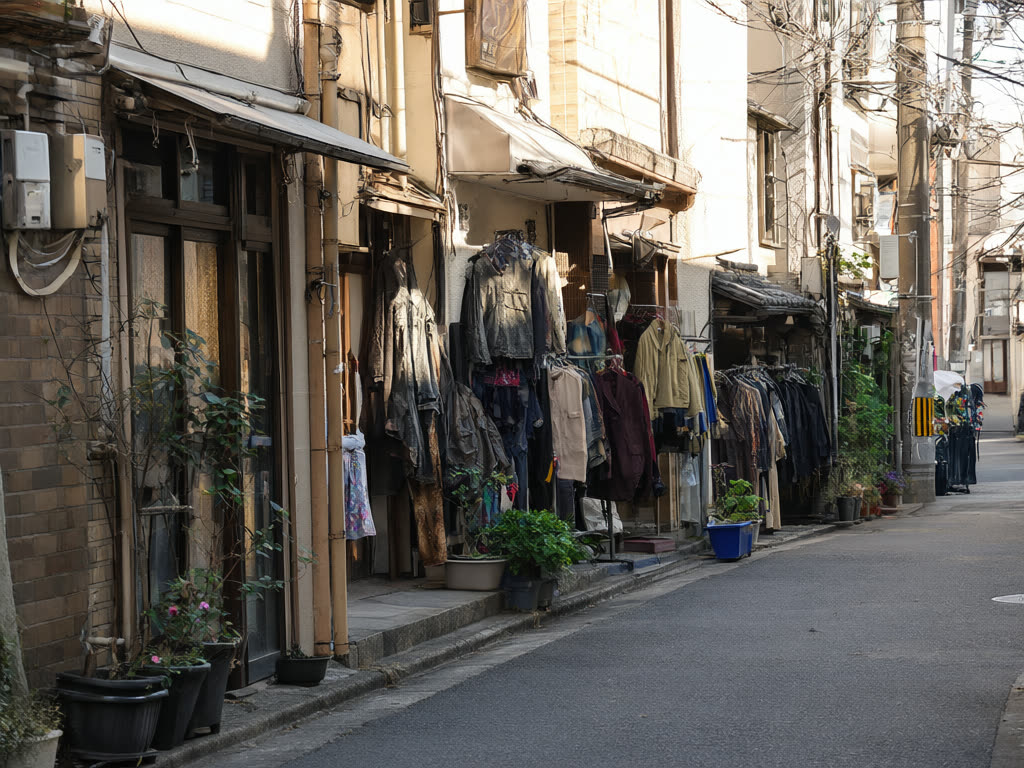
Shimokitazawa is a low-rise neighbourhood of secondhand clothing shops, record stores, small theatres and live music bars. From Shibuya, the Keio Inokashira Line gets you there in a few minutes; its platforms are inside the Mark City building, signed from the JR station. The Odakyu Line also stops here, through separate gates.
The densest concentration of vintage shops is north of the station. On the south side, the old railway land has been turned into small low-rise shopping strips, including reload and Bonus Track, with independent shops, a bookshop and places to eat outdoors.
Come after midday. Many shops open at noon or later, and a fair number still prefer cash. Shimokitazawa is better in the afternoon and early evening than as a rushed morning stop.
Getting around
Harajuku Station (JR Yamanote Line) and Meiji-jingumae Station (Chiyoda and Fukutoshin lines) are next to each other. Omotesando Station is served by the Ginza, Hanzomon and Chiyoda lines. Shibuya is served by JR, three subway lines and two private railways, and the station is in a long redevelopment, so exits and corridors change. Follow the signs for the exit you want, not the line you arrived on, and allow extra time.
All of this is covered by an IC card such as Suica or PASMO. Our trains and IC card guide explains how to get and top up one.
If you only have a few hours
Skip Takeshita Street and Shimokitazawa. Do Meiji Jingu first thing, walk down Omotesando, and see the crossing from the Mark City walkway before crossing it yourself. If you are building a longer trip, our three-day Tokyo itinerary shows how this area fits with Asakusa, Shinjuku and the east side of the city.
Keep the map open while you walk
Shibuya Station has a dozen exits and several rail companies, rooftop tickets are sold online by time slot, and Shimokitazawa's best shops are down unmarked lanes. An eSIM installed before you fly keeps maps, ticket QR codes and translation working all day.
Japan eSIM from ¥480