One day in Asakusa, planned by people who work here
Our office is a few minutes from Senso-ji, so we see the neighbourhood at every hour: empty at dawn, packed at noon, quiet and lit up at night. Most visitors arrive at 11 am, walk up Nakamise, take a photo at the main hall and leave. That is the busiest and least interesting way to do it. Here is how we would spend a full day.
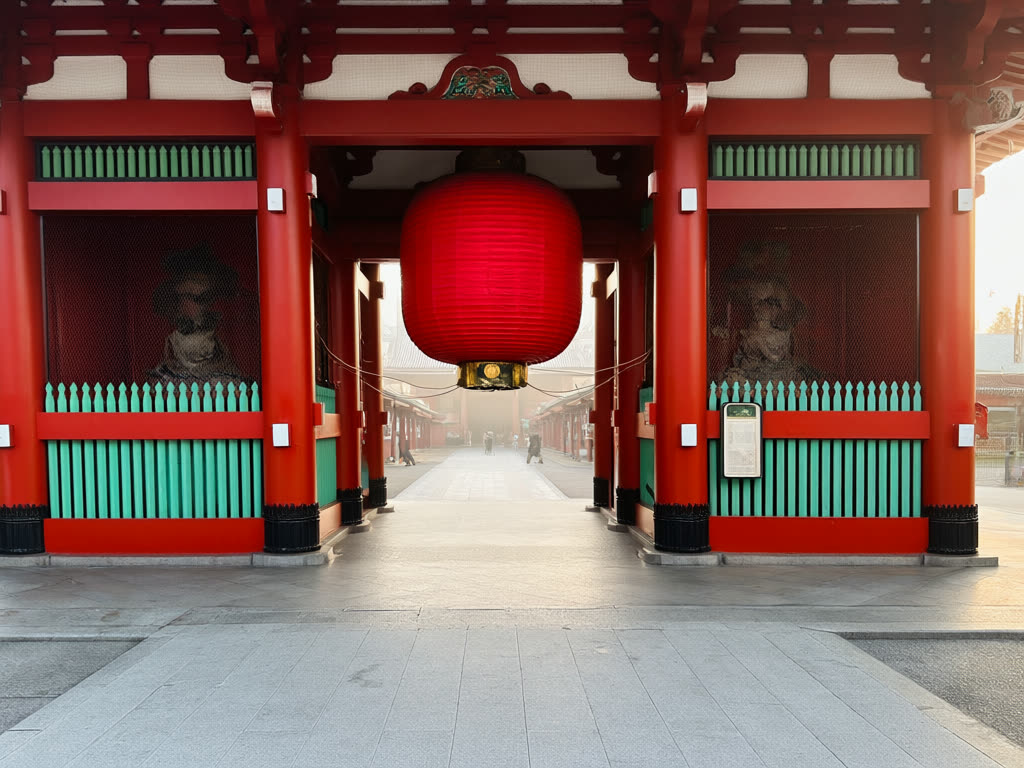
Early morning: Senso-ji before the tour groups
The temple grounds never close, and the main hall opens early, around 6 am (a little later in the winter months). Between opening and about 8:30 you share the place with locals on their way to work, a few joggers and the occasional photographer. Smoke drifts from the big incense burner, the pigeons have the courtyard to themselves, and you can stand under Kaminarimon, the gate with the huge red lantern, without anyone in your frame.
Nakamise, the 250-metre shopping street between the outer gate and the inner Hozomon gate, is mostly shuttered at this hour. That is a plus: the shutters are painted with scenes of Asakusa's history and festivals, and you only see them when the shops are closed.
A few things to do while it is quiet:
- Draw an omikuji fortune. Put a 100-yen coin in the box, shake the metal canister until a stick comes out, and take the paper from the drawer with the matching number. Senso-ji is known for giving out a lot of bad fortunes. If you get one, tie it to the rack and leave it behind.
- Look at the five-storey pagoda from the west side of the courtyard, where the light hits it in the morning.
- Walk behind the main hall to Asakusa Shrine, the small Shinto shrine that hosts the Sanja Matsuri festival in May. Most visitors never go round the back.
Temple hall hours can shift with the season and with events, so check the official site before you go if you are planning around them.
Mid-morning: the side streets
By 10 am Nakamise is full. This is the time to leave it. The streets to either side are where Asakusa still works as a neighbourhood.
Denboin-dori runs east to west across the top of Nakamise. The shopfronts are built in an old Edo style, and you will find shops selling wooden combs, hand-printed cloth, and small toys. It is less crowded than Nakamise and the shops tend to sell things made by the people behind the counter.
Orange-dori and the covered arcades west of Nakamise (Shin-Nakamise and the streets around it) are where locals shop: rice crackers grilled in front of you, tea, knives, umbrellas, kitchen goods. Prices are usually lower than on Nakamise.
Hoppy Street, on the west side near the Hanayashiki amusement park, is a row of open-front bars serving stewed beef tendon and cheap draught beer, with plastic stools spilling into the street. It gets going from late morning, which is very Asakusa. For a guide to this kind of place, see our article on izakaya and yokocho alleys.
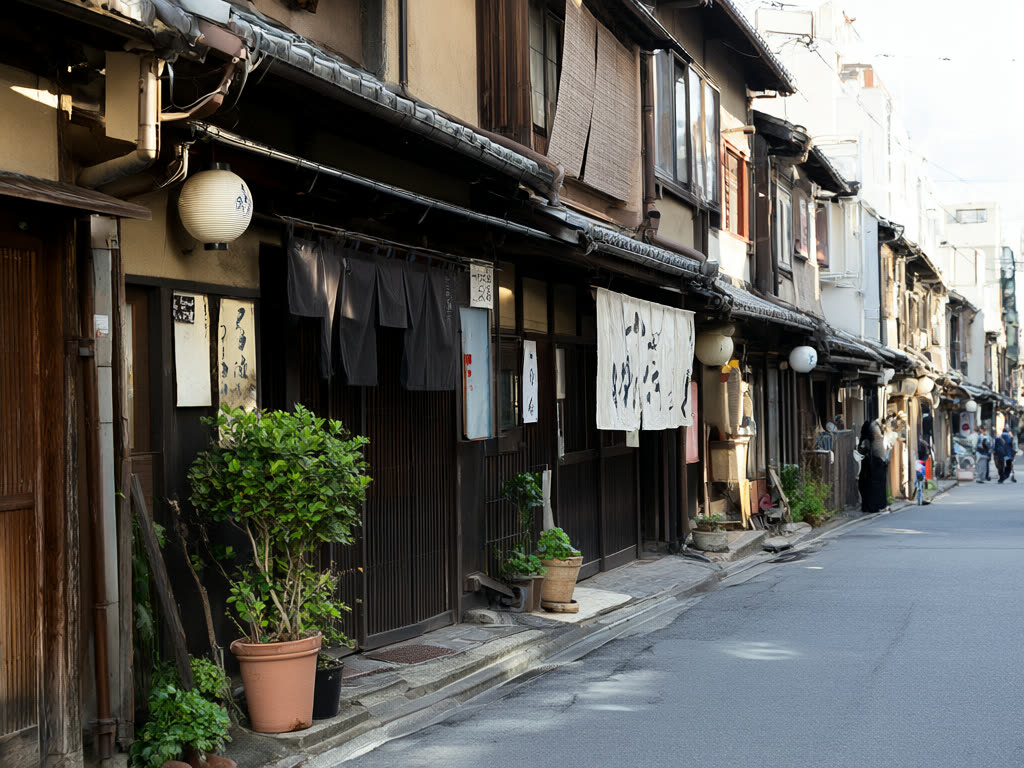
For lunch, the classic local choice is tendon, a bowl of tempura on rice with a dark, sweet sauce. Our Tokyo food guide explains what to order and how to avoid the long queues.
Afternoon: Kappabashi kitchen street
Walk west from Senso-ji for about ten to fifteen minutes and you reach Kappabashi Dougu-gai, a long street of shops that supply Tokyo's restaurants. Chefs come here for knives, pots, lacquer trays, noren curtains, paper lanterns and the plastic food models you see in restaurant windows.
It is a better place for souvenirs than it first sounds:
- Kitchen knives. Several specialist shops have staff who explain the steel and the shapes, and some will engrave a name. Check your airline's rules before you buy; knives must go in checked luggage.
- Food samples. A plastic sushi fridge magnet or a fake bowl of ramen makes a very Tokyo present. Some shops run short workshops where you make your own; book ahead if this is on your list.
- Tableware. Rice bowls, chopsticks and sake cups at trade prices, often cheaper than gift shops near the temple.
Plan around Sunday. Many Kappabashi shops close on Sundays and public holidays, and most keep roughly 10 am to 5 pm on other days. Hours vary by shop, so look up the ones you care about before you walk over. In October the street holds an annual tool festival with sales.
Late afternoon: along the Sumida River
Head back east, past the temple, to the river. Sumida Park runs along both banks. In late March and early April it is lined with cherry blossoms; the rest of the year it is a quiet place to sit with a drink from a convenience store and watch the water buses go by.
From the park, cross the river on the Sumida River Walk, a pedestrian bridge that runs alongside the Tobu railway line. Trains pass a metre or two from you, and the view down the river is one of the best free views in this part of town. On the far side, Tokyo Mizumachi is a row of small cafes, a bakery and shops built into the arches under the tracks. From there it is about another ten minutes on foot to Tokyo Skytree.
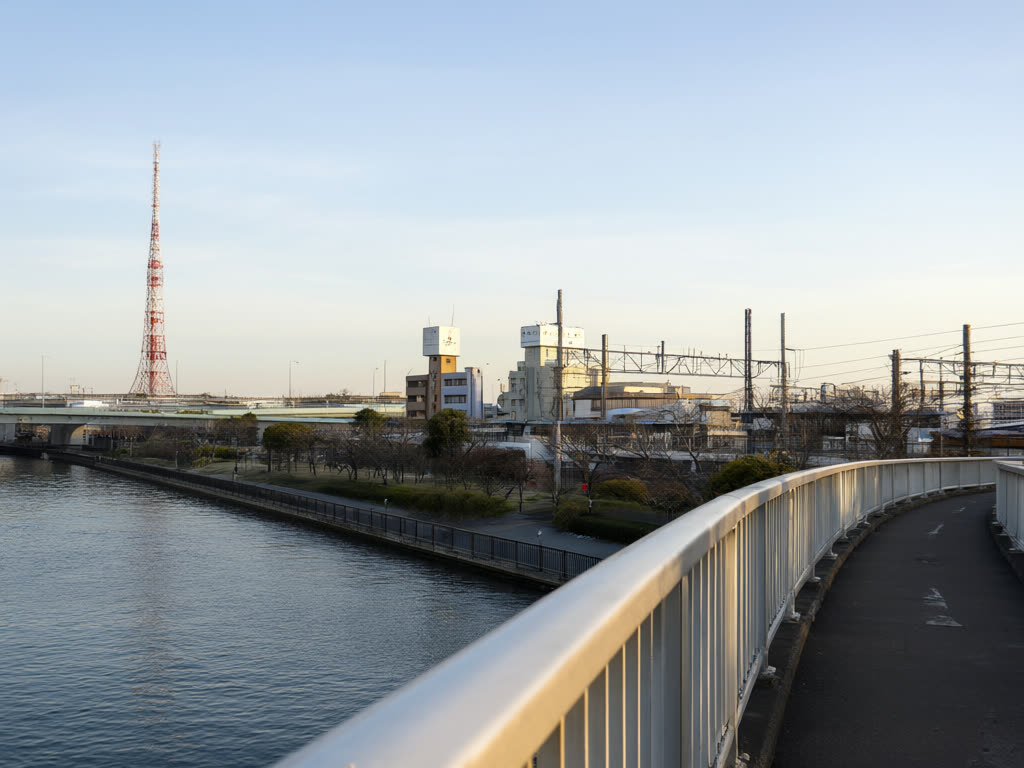
If you want to go up Skytree itself, buy a timed ticket online in advance, especially for sunset slots. If you just want to look at it, you do not need to.
Evening: views without a ticket
Two places give you a good view of the area for free or the price of a drink:
- Asakusa Culture Tourist Information Center, directly opposite Kaminarimon. Take the lift to the top floor for an open terrace looking down Nakamise to the temple, with Skytree off to the right. It is free and, at the time of writing, stays open until around 10 pm, later than the information desk below.
- Asahi Sky Room, on the 22nd floor of the Asahi Beer building across the river (the one next to the golden sculpture). It is a bar with big windows facing Skytree and Asakusa. You order a drink to sit down, and around sunset there is usually a wait list.
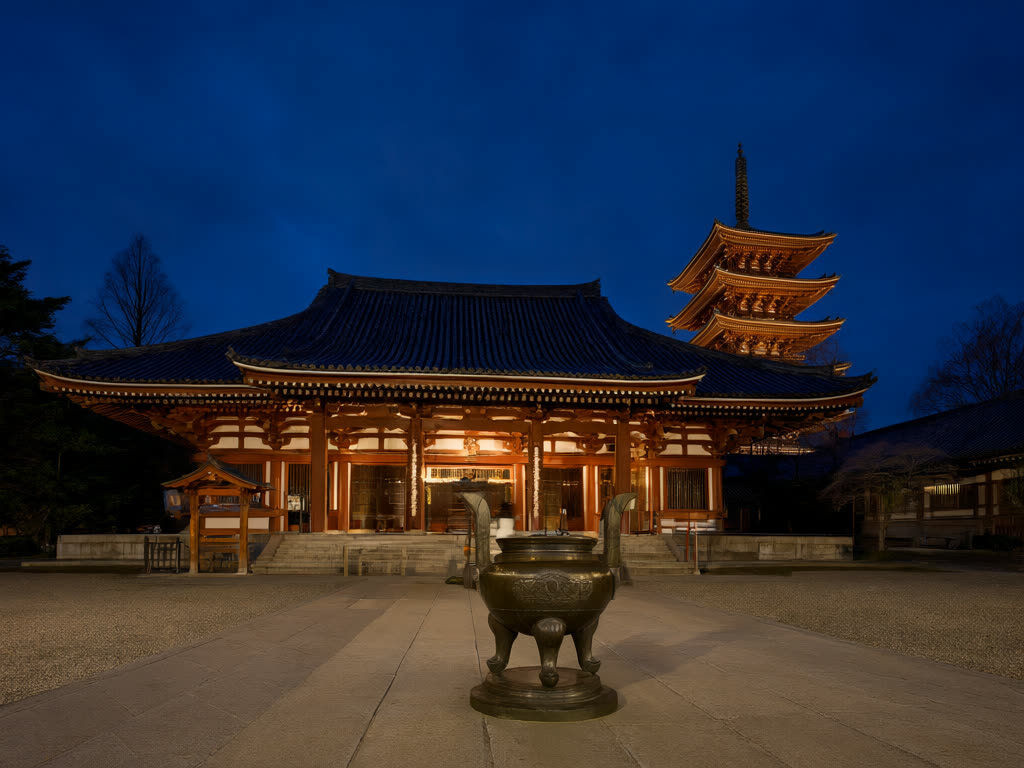
After dark, go back to Senso-ji. The main hall closes in the early evening, but the grounds stay open and the gate, the hall and the pagoda are lit up until late. It is calm, and it is the time we would choose to show a friend the temple for the first time.
Rickshaws: worth it or not?
You will see rickshaw pullers in matching outfits near Kaminarimon all day. They are licensed, well trained and know the area well, and a ride takes you down lanes you would not find alone. It is not cheap: at the largest operator, a 30-minute ride for two was around ¥10,000 at the time of writing, with shorter and longer options, and a small fee for commentary in languages other than Japanese. Prices change, so check the operator's official page.
If you do it, we think the best time is late afternoon, when the light is soft and the crowds are thinning. Ask the puller to take you somewhere quiet rather than straight down the main road.
Where we go ourselves
A few habits from people who work here:
- We avoid Nakamise between 11 am and 3 pm on weekends. Use the parallel streets instead; they reach the temple just as fast.
- We eat lunch early or late. Popular shops queue at noon and many snack stalls sell out by mid-afternoon.
- We walk the river at dusk. It is the most underrated part of Asakusa.
- We come to the temple at night for visitors who have only seen it in the daytime.
If Asakusa is your base, it is also a short train ride from Ueno. Our Ueno and Yanaka guide makes a good second day, and if you are only in Tokyo briefly, see our three-day Tokyo itinerary for how Asakusa fits with the rest of the city. For getting around, our guide to Tokyo trains and IC cards covers the basics.
Asakusa is easier with a map in your hand
The best parts of Asakusa are in lanes that are hard to find from a paper map, and shop hours change by the day. With an eSIM installed before you fly, you can check what is open, find the side streets and book a rickshaw from the moment you land.
Japan eSIM from ¥480