Does a Japan eSIM work in rural areas, Hokkaido, Okinawa and Mount Fuji?
For most trips, yes. A Japan eSIM connects to local Japanese mobile networks, 4G or 5G where available, and those networks cover nearly all populated areas: cities, towns, main roads and rail lines, and the popular sights in Hokkaido, Okinawa, the Mount Fuji area and well-known onsen towns. Where you should expect weak or no signal is deep in the mountains, on remote hiking trails, in some tunnels, on small outlying islands, and on the upper slopes of Mount Fuji outside the summer climbing season.
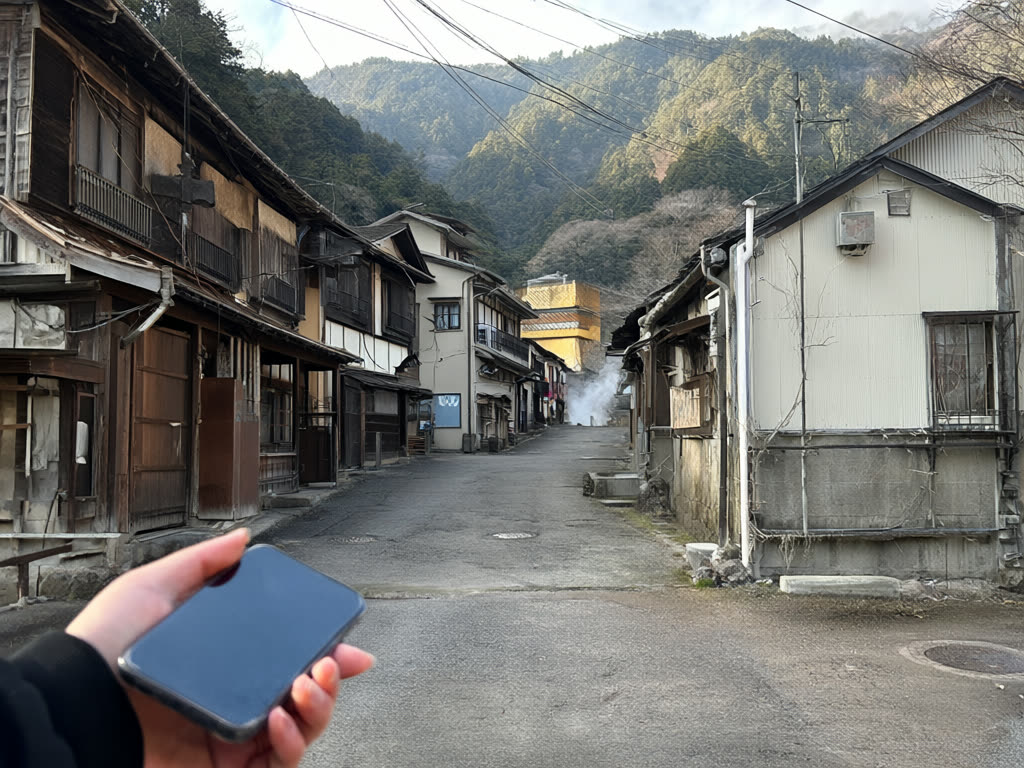
How coverage works with a travel eSIM
A travel eSIM is not its own network. It uses the existing Japanese mobile infrastructure, so where a local phone gets signal, you generally will too. Two things follow from that:
- 4G is the baseline, 5G is a bonus. 5G is concentrated in cities and busy areas. In the countryside your phone will mostly use 4G, which is plenty for maps, messaging, translation and browsing.
- Signal is about terrain, not region. A ski town in Hokkaido can have better signal than a mountain valley two hours from Tokyo. Mountains, deep gorges, long tunnels and distance from towns cause gaps, wherever they are.
We do not promise specific speeds or coverage at any location, and nor can anyone selling mobile service honestly. What follows is what visitors typically experience.
Region by region
Hokkaido. Sapporo, Otaru, Hakodate, Asahikawa and Furano have good coverage, as do the main ski resorts and highways. Coverage thins on long drives across the interior and in national parks such as Daisetsuzan and Shiretoko, where there are stretches with no signal. If you are driving, download offline maps before leaving town.
Okinawa. The main island is well covered, including Naha, the expressway and the resort coast. The larger outer islands such as Ishigaki and Miyako are covered in and around towns. Small islands, beaches far from settlements and boat trips out to sea can be patchy.
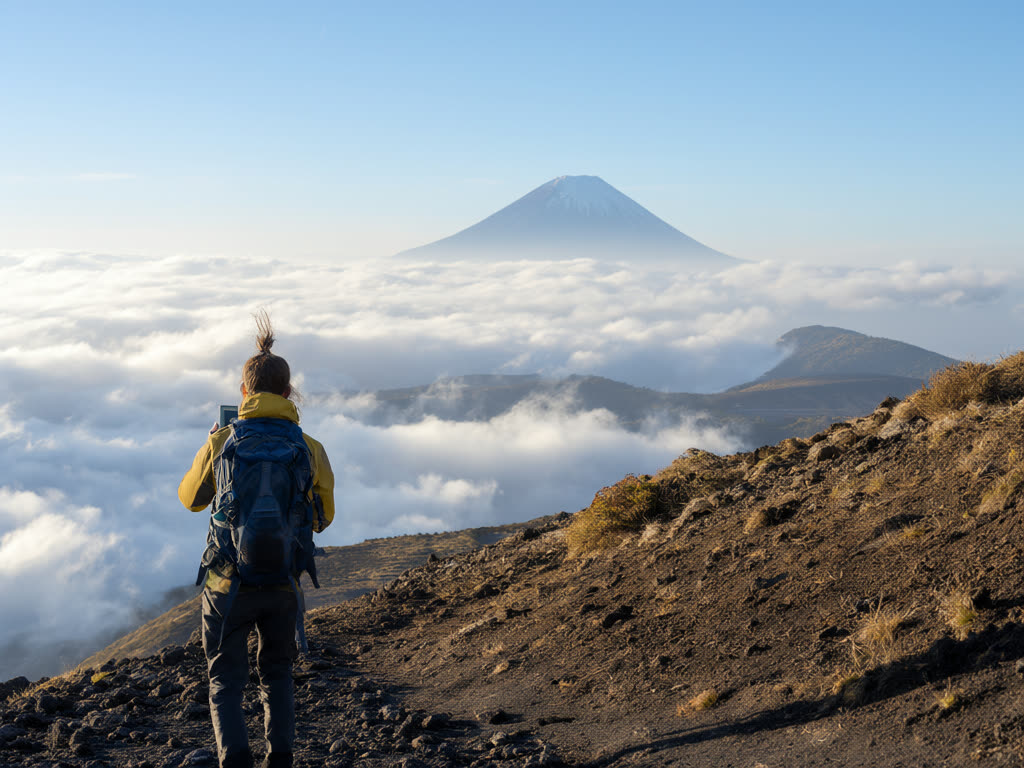
Mount Fuji. The lakes area around Kawaguchiko and the 5th stations have signal (see our Mount Fuji and Kawaguchiko guide). On the climbing trails, signal becomes intermittent as you go higher. During the official climbing season (1 July to 10 September in 2026), extra equipment is installed so the summit and mountain huts get coverage, but even then expect drop-outs in bad weather and on parts of the route. Outside the season, do not count on signal above the lower stations.
Rural onsen towns. Popular hot-spring towns such as Hakone, Kusatsu, Ginzan, Kinosaki or Beppu have signal in the town itself. A ryokan at the end of a valley road may have weak mobile signal indoors and may or may not have Wi-Fi, so check with the inn if staying connected matters to you.
The Japan Alps and Kumano Kodo. Mountain areas such as Kamikochi, the Alps trails, inland Shikoku and the Kii Peninsula pilgrimage routes all have long sections without signal. Villages and trailheads usually have some coverage. Plan these hikes as if you will be offline.
Trains and tunnels
On Shinkansen and limited express trains, coverage is generally good along the line. Many long tunnels have been fitted with coverage over the years, but you will still see the signal drop for a few seconds to a couple of minutes in some tunnels, especially on mountain routes. Your messages and maps pick up again on the other side. Underground stations and subways in big cities are generally covered.
Our Tokyo trains guide covers the routes most visitors use.
How to prepare for a rural trip
- Download offline maps for the area before you leave a town with good signal. Most map apps let you save a region.
- Save bookings and tickets offline. Screenshot hotel confirmations, QR tickets and bus timetables.
- Download a translation language pack so camera translation works without a connection.
- Keep your phone charged. Searching for a weak signal drains the battery faster. A small power bank helps.
- Tell someone your route if you are hiking in the mountains. Do not rely on your phone as your only safety plan.
- Choose enough data. Rural use is usually lighter than city use, but long train rides with video add up. See how much data you need.
What to do if you have no signal
- Move to higher ground or an open area, away from buildings and valley floors.
- Toggle airplane mode on and off once you are somewhere with better reception, so the phone searches again.
- Check in your phone's network settings that network selection is set to automatic.
- If you have no signal even in a town where locals are using their phones, the problem is probably a setting rather than coverage. Our FAQ has the checklist, or contact us with your order number.
When an eSIM is not the right tool
If you will spend days on multi-day mountain hikes, sail between small islands or work from remote cabins, no mobile plan will give you signal where there is no network. In that case, plan around offline tools and the accommodation's Wi-Fi, and use the eSIM for the stretches in between. A pocket Wi-Fi uses the same kind of mobile networks, so it does not solve gaps either (see eSIM vs pocket Wi-Fi vs SIM).
Common mistakes
- Assuming "no signal" means the eSIM is broken, when you are in a valley or tunnel.
- Leaving offline maps until you are already out of coverage.
- Expecting 5G in the countryside. 4G is normal there and works fine.
- Using a power-hungry hotspot all day on rural roads and running the battery flat.
Quick answer: A Japan eSIM works in the places most visitors go in Hokkaido, Okinawa, the Mount Fuji area and onsen towns, on 4G/5G where available. Coverage gaps are real in deep mountains, remote trails, some tunnels, small islands and high on Mount Fuji outside the climbing season, so download offline maps before heading out.
Last updated: 18 October 2026.
Data for the city and the countryside
Our Japan eSIM uses local networks, 4G/5G where available. Plans from 1GB to 50GB, and the days only start when it first connects in Japan.
Japan eSIM from ¥480