Tokyo in winter: illuminations, Christmas markets, New Year's Eve and the first shrine visit
From early November to mid-February, Tokyo strings lights through its big shopping districts, opens German-style Christmas markets and then switches to the most important holiday of the Japanese year: New Year. Christmas here is a date-night and shopping event. New Year is when families travel, shrines fill and small shops close.
We work in Asakusa, a few minutes from Senso-ji, so the New Year section is the part we know best.
Before you plan around a date
A 2026 date below is what the organiser had announced when we checked in mid-October 2026. A "usual" window means the 2026 schedule was not out yet. Check the official site before you go.
The illuminations, area by area
All are free. Lights usually come on around 5pm and stay on until 10pm or 11pm.
Marunouchi
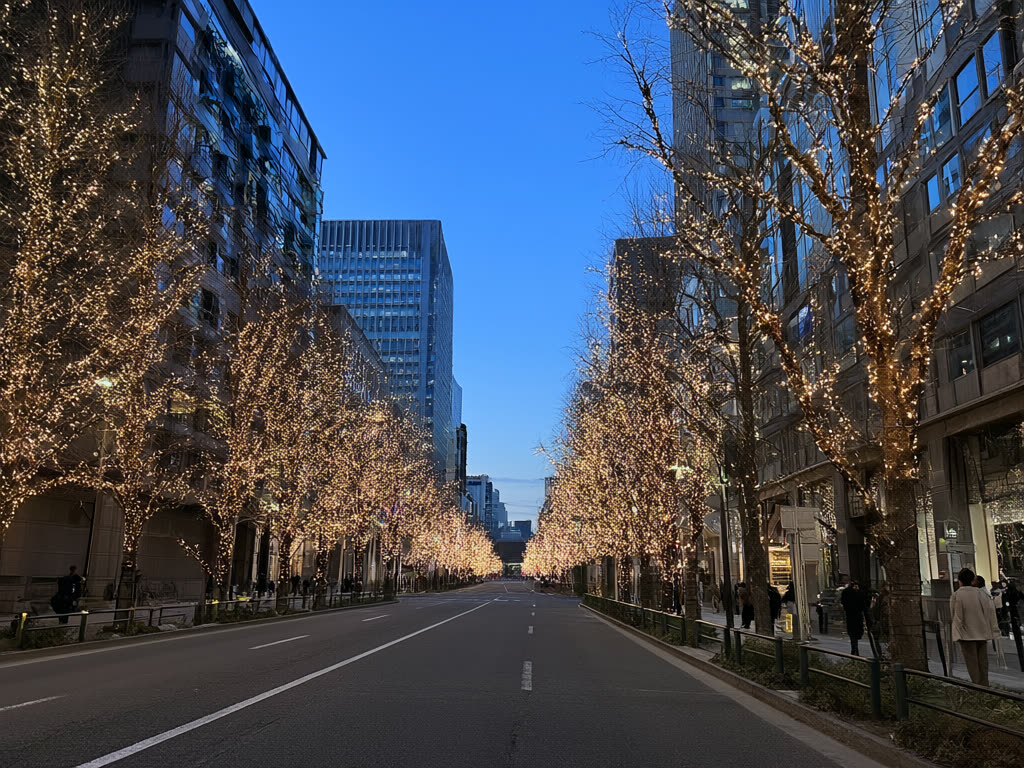
The roughly 1.2 km of Naka-dori between Tokyo Station and Yurakucho is lined with trees wrapped in champagne-gold lights. It is the calmest of the big displays, with room to walk. Last season it ran from mid-November 2025 to mid-February 2026, lit from 4pm to 11pm and until midnight in December. Travel listings put the 2026 season at 12 November to 14 February 2027; confirm on the Marunouchi official site. In December, the broad Gyoko-dori avenue in front of the station's red-brick facade usually gets its own lights for a few weeks.
Roppongi: Keyakizaka and Tokyo Midtown
Keyakizaka, the slope below Roppongi Hills, is the one in every photo: a street of zelkova trees in white and blue with Tokyo Tower at the end. For 2026 it is announced from 5 November to 25 December. A ten-minute walk away, Tokyo Midtown lights up its lawn and garden; its 2026 programme is announced from 26 November to 25 December, so in early November only Keyakizaka, of the two, will be lit. We cover both in more detail, with crowd tips, in our autumn leaves and lights guide.
Shiodome: Caretta
The plaza in front of Caretta Shiodome, a shopping and office complex by Shiodome Station, runs a themed light display with a short sound-and-light show that repeats through the evening. It has usually run from mid-November to around Valentine's Day, but the 2026 schedule had not been published when we checked. An easy add-on to Ginza.
Ebisu: Yebisu Garden Place
The centrepiece here is an enormous Baccarat crystal chandelier, about five metres tall, set up in the open-air plaza between the brick buildings. Last season it ran from 8 November 2025 to 12 January 2026, with a small Christmas market at the start. Expect the 2026 season to open in early November, but check the Yebisu Garden Place site. Go on a weeknight; a weekend crowd hides it.
Omotesando
Omotesando Hills puts a tall tree in its atrium from early November, and in recent years the zelkova trees on the avenue have been lit from early December into early January. Walk it after 8pm, when shoppers thin out. Our Shibuya and Harajuku guide covers the rest of the area.
Christmas markets
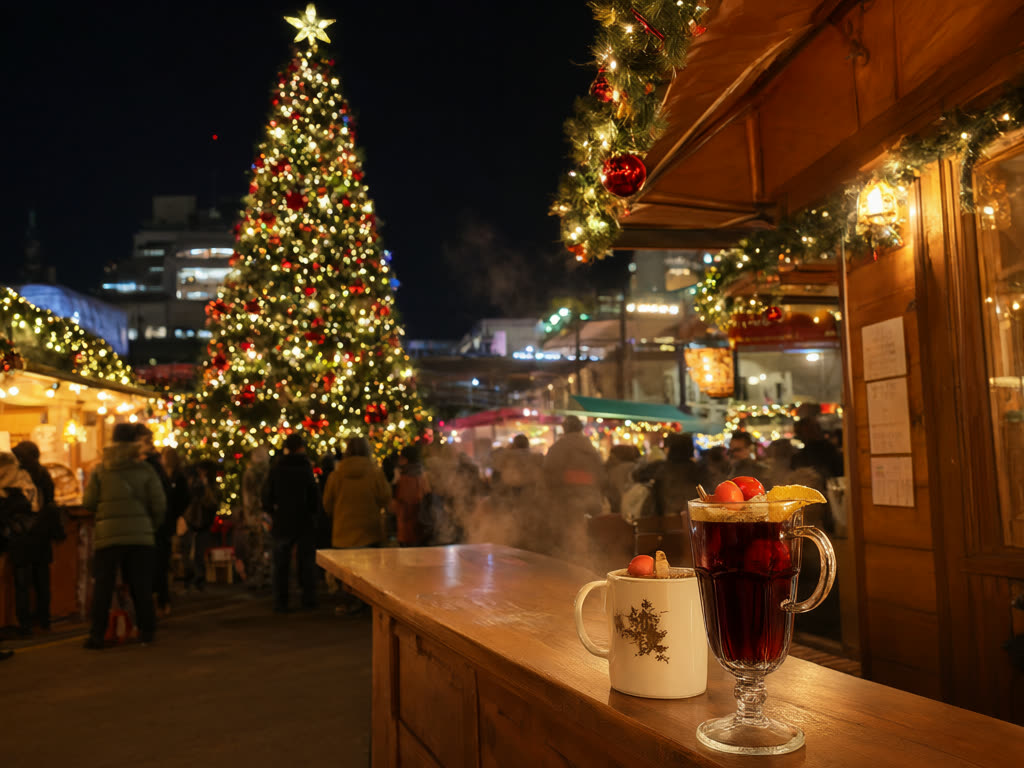
Smaller than Germany's and more about food than shopping, but mulled wine on a cold night still works.
- Tokyo Christmas Market is the biggest. For 2026 the organiser lists two sites: Shin-Toyosu, by the bay, from 20 November to 25 December (11am to 9:30pm, from 4pm on the first day), and the plaza at Shiba Park in front of Onarimon Station from 4 December to 25 December (11am to 10pm), close to Tokyo Tower. Last entry is about an hour before closing. Tickets have been sold in advance online, including a version with a souvenir mug; check tokyochristmas.net for current prices.
- Roppongi Hills Christmas Market fills the plaza under the big canopy. It is announced for 21 November to 25 December 2026, 11am to 9pm, free to enter.
- Yebisu Garden Place has run a small market around the chandelier in recent years.
Weekday evenings are far calmer than weekends, and the last week before Christmas is the busiest of all.
Christmas Eve and Christmas Day
24 December is the big night, mostly for couples: restaurants book out weeks ahead and the lights are at their most crowded. 25 December is a normal working day, and most Christmas-themed displays switch off that night. Expect queues at fried chicken shops and cake counters, the local Christmas meal.
New Year's Eve
Central Tokyo has no big midnight fireworks. What it does instead is quieter, and older.
Temple bells. Many Buddhist temples strike their great bell 108 times around midnight, a custom called joya no kane, one strike for each worldly desire. At Zojo-ji, next to Tokyo Tower, crowds start gathering from about 10pm; in some years white balloons have been released at midnight with the tower lit behind. At most large temples, including Senso-ji, the bell is rung by the monks, so you will be listening rather than taking part.
Shibuya. The street countdown at Shibuya Crossing was cancelled for the 2025/26 New Year, and in earlier years too, because of crowd and drinking problems. Drinking in public around Shibuya Station is banned from 6pm to 5am all year, and local shops have stopped selling alcohol on the night. Do not plan around it unless the ward announces something new.
Trains. In some years certain lines have run extra trains through the night of 31 December; in others they have not. Check the operator's website a few days before, and know your last train before you go out.
Hatsumode: the first shrine visit
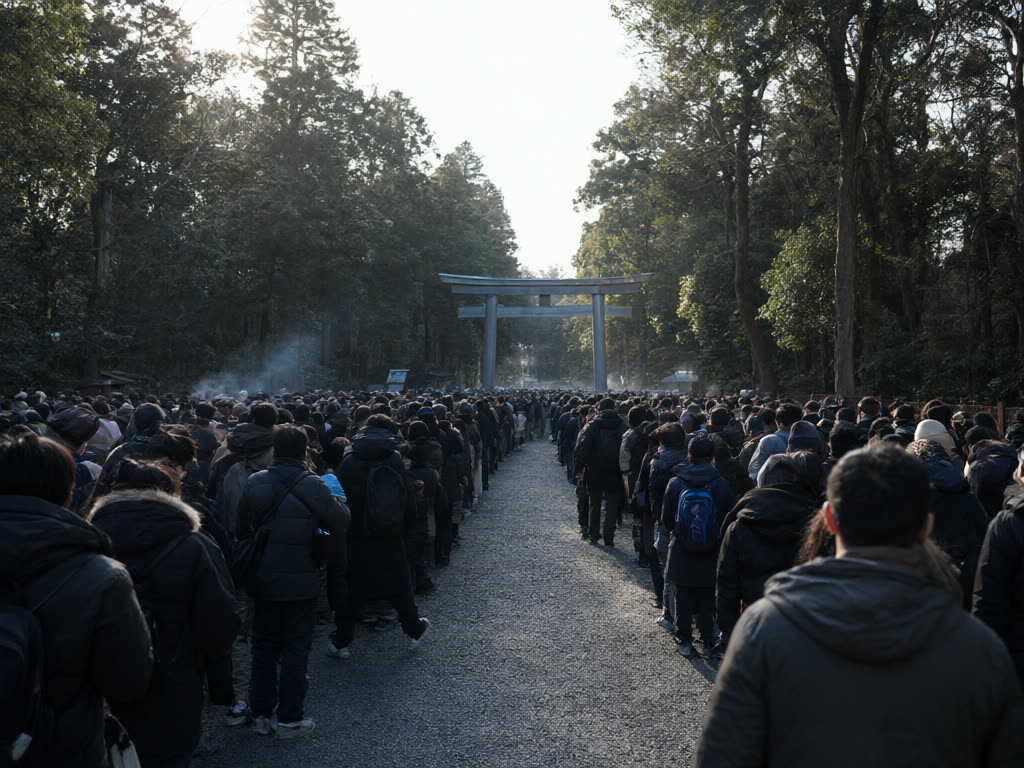
In the first days of January, millions of people visit a shrine or temple to pray for the year ahead. Most go on 1 to 3 January; the custom loosely runs to about 7 January.
Meiji Jingu in Harajuku is the busiest shrine in the country at New Year, drawing several million visitors in the first three days. Its gates stay open through the night of 31 December. The worst times have been from about 10pm on New Year's Eve to 3am, and from late morning on 1 to 3 January. Police release the queue in blocks; expect an hour or more at the peak. Go early on 4 or 5 January if you want the forest path to yourself.
Senso-ji in Asakusa is the busiest Buddhist temple. The temple grounds are open around the clock, and on New Year's Eve the crowd builds from about 11pm. On 1 January police have run the approach one way from Kaminarimon, with no stopping for photos at the gate, and nearby streets close to traffic. The food stalls on the side streets are part of the fun. Our Asakusa in one day guide has the rest of the neighbourhood.
Smaller and closer. If you just want the experience, Kanda Myojin near Akihabara and Hie Jinja in Akasaka are busy but more manageable, and the shrine nearest where you are staying will usually have a short line.
Etiquette that matters
- At a shrine (torii gate, Shinto): rinse your hands at the water basin, toss a coin in the offering box, bow twice, clap twice, pray, bow once. At a temple (Buddhist): no clapping; put your hands together quietly.
- A ¥5 coin is traditional (its name sounds like "good connection"); any amount is fine.
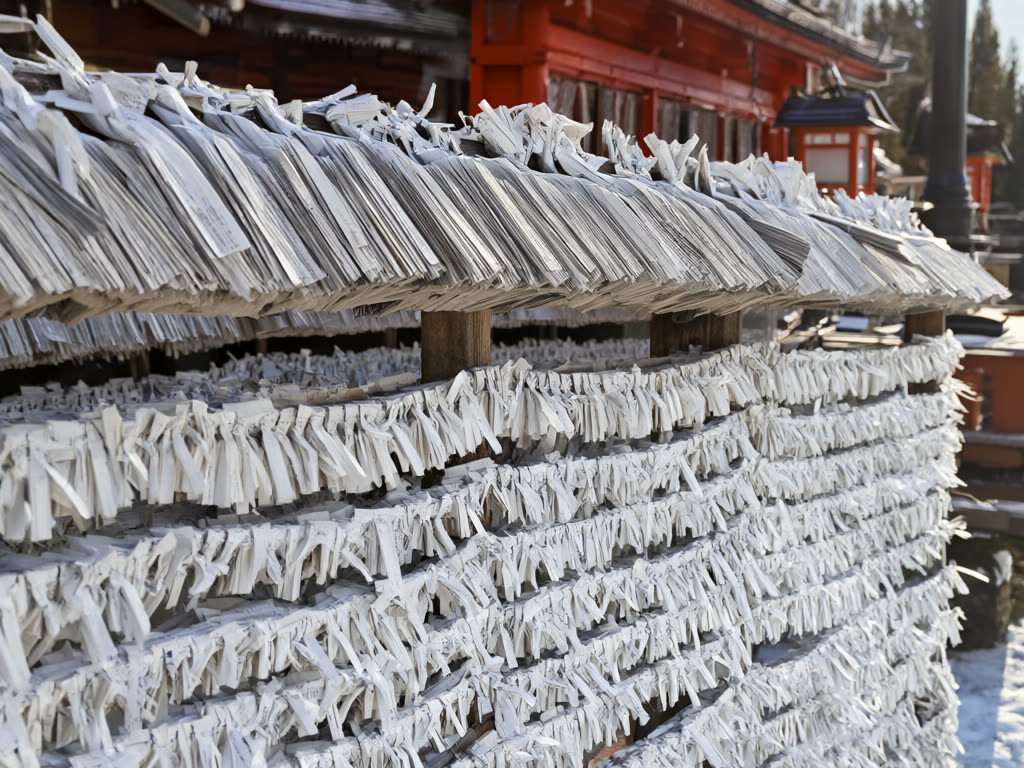
- Omikuji fortune slips cost a few hundred yen. If you draw a bad one, tie it to the rack provided and leave it behind.
- People bring last year's charms back to be burned. You will see collection boxes near the entrance.
- Keep moving in the queue and do not stop to film at the front.
Practical New Year notes
- Many smaller restaurants and shops close from about 31 December to 3 January. Big chains and department stores reopen on 1 or 2 January, often with lucky bags (fukubukuro) and sales; see our Ginza and Nihonbashi guide.
- Banks close for several days; convenience store ATMs keep working. Our convenience store guide explains which ones take foreign cards.
A simple winter plan
Evening one: Marunouchi at dusk, then walk or take one stop to Ginza for dinner. Evening two: Tokyo Midtown and Keyakizaka in Roppongi, with Tokyo Tower in view; for a higher look, see Tokyo night views. Evening three: Yebisu Garden Place, then a drink from our Tokyo bars guide. New Year: joya no kane on the 31st, then an early hatsumode on the 2nd or 3rd.
Travelling with children? Tokyo Disney Resort runs its own winter season; see our Tokyo Disney Resort guide.
Winter nights run on your phone
Light-up start times, last trains on New Year's Eve, crowd notices from shrines and a map to the next exit when police close a street. Install your eSIM before you fly and all of it works the moment you land.
Japan eSIM from ¥480