Tokyo convenience stores: what to eat, which ATMs take your card, and how to ship a suitcase
A Japanese convenience store, or konbini, is a small shop that does a surprising amount. You can eat a decent breakfast there, withdraw cash with a foreign card, print a document from your phone, buy a concert ticket and send your suitcase to the airport. Most are open 24 hours, and in central Tokyo there is usually one within a few minutes' walk.
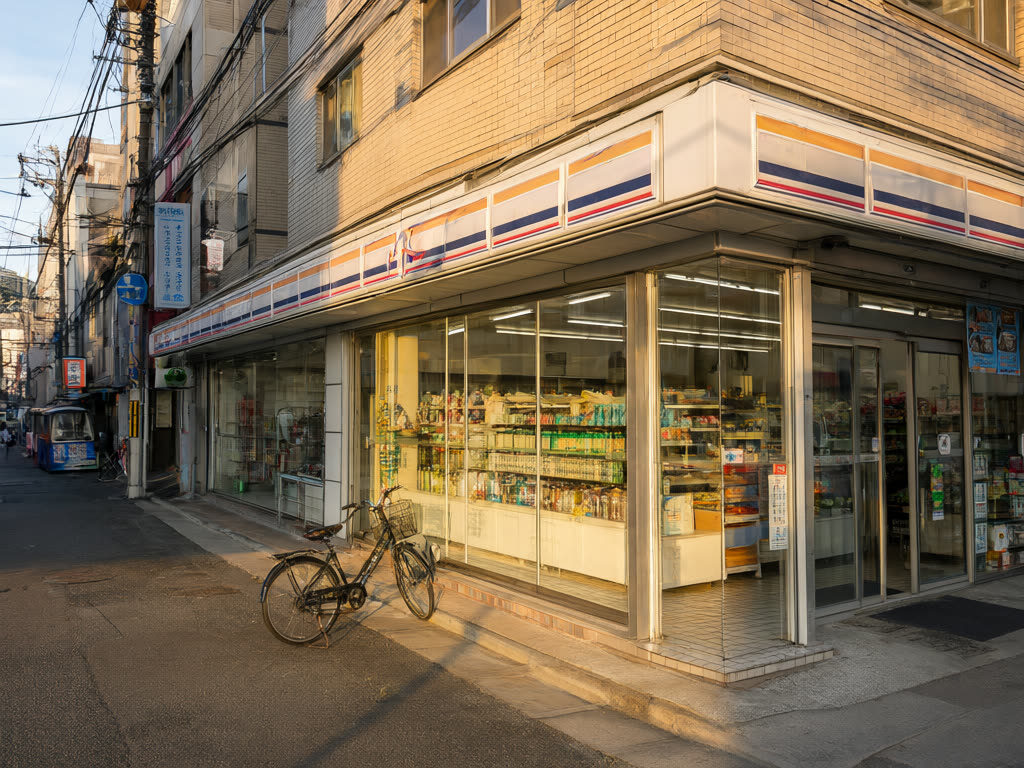
The three big chains are 7-Eleven, FamilyMart and Lawson, with smaller ones such as Ministop and Lawson's health-focused Natural Lawson. They are more alike than different. Each has its own signature snacks and services, which we note below, but you do not need to cross the street for a particular brand.
What to eat
Onigiri and sandwiches
Rice balls cost roughly ¥150 to ¥300 and are labelled by filling: salmon, tuna mayonnaise, pickled plum, kelp. The wrapper has numbered tabs: pull 1 down the middle, then 2 and 3 to the sides, and the seaweed stays crisp. Egg sandwiches, soft white bread with creamy egg salad, are a Japanese favourite at every chain.
Bento and the microwave
When you buy a bento, pasta or rice bowl, staff will often ask "Atatamemasu ka?" ("Shall I heat it?"). Say "Hai, onegaishimasu" for yes. Some stores have a microwave you use yourself near the eat-in counter. Hot and cold items are bagged separately, so say if you would rather keep them together.
The hot-snack counter
Next to the till is a heated case of fried chicken, croquettes and steamed buns. Point, or say the name on the label. Each chain has a famous item: FamilyMart's Famichiki, a large boneless fried chicken fillet; Lawson's Karaage-kun, small fried chicken pieces in a box with a rotating set of flavours; and 7-Eleven's fried chicken and its winter nikuman pork buns. Most are a few hundred yen. Eat them while they are hot.
In the colder months, many stores also sell oden, fish cakes, radish and eggs simmered in broth. Pick pieces into a cup, or ask staff to help.
Coffee and drinks
Coffee is self-service. Buy a cup at the till, small or large, hot or iced, then take it to the machine and press the matching button. A small hot coffee has cost a little over ¥100 at most chains. For iced coffee you take a cup of ice from the freezer first and pay for it at the till.
Alcohol is sold to people aged 20 and over. At the till you may be asked to tap a screen to confirm your age.
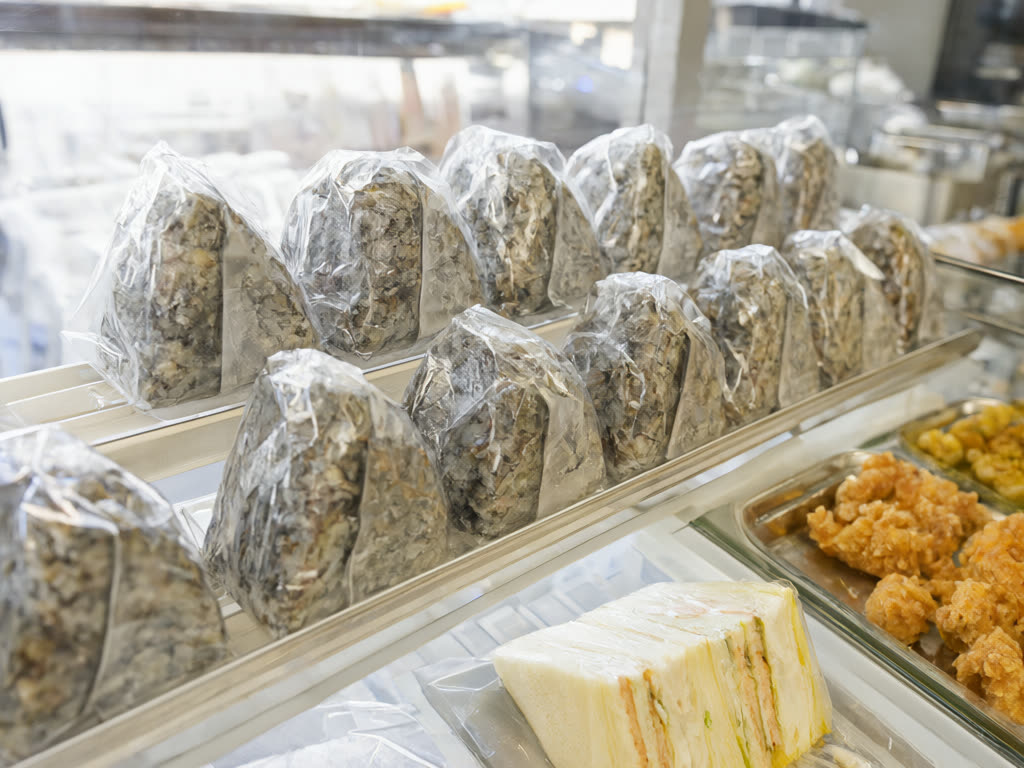
A full meal for under ¥1,000
Two onigiri, a fried chicken piece and a bottle of tea will usually come in under ¥1,000. Add a seasonal dessert from the chilled shelf: chains launch new sweets every few weeks, and some are as good as patisserie versions.
Paying
Every chain takes cash, major credit cards, transport IC cards such as Suica and PASMO, and several QR payment apps. A growing number of stores have self-checkout tills with an English option. Plastic bags cost a few yen; say "Fukuro irimasen" if you do not need one. If you carry an IC card on your phone, see Suica, PASMO and phone data and our Tokyo trains guide.
ATMs that take foreign cards
Konbini ATMs are the easiest way to get yen in Japan, and they keep working when banks close for public holidays and New Year.
- 7-Eleven (Seven Bank ATMs): the widest acceptance. Seven Bank lists Visa, Mastercard, American Express, JCB, UnionPay, Discover, Diners Club, Cirrus, PLUS and Maestro, though some cards with those marks may still be refused. Screens have English and many other languages.
- Lawson (Lawson Bank ATMs) and FamilyMart (usually E-net or partner ATMs): both have accepted many foreign cards, though limits per withdrawal may be lower and some machines only give out ¥10,000 notes.
Fees and limits change, and travel guides disagree on current amounts. At the time of writing, fees have been in the range of roughly ¥110 to ¥220 per withdrawal, sometimes more at night, plus whatever your own bank charges. The ATM shows the fee before you confirm. If the screen offers to convert the amount into your home currency, choosing yen is often cheaper.
Japan Post ATMs, in post offices and many train stations, are another option.
Multi-copy machines: printing, tickets and bills
The big copier by the window does much more than copies.
- Print from your phone: each chain has a free app or web service. You upload a PDF or photo, get a number or QR code, and print at the machine. Useful for boarding passes, hotel confirmations or visa paperwork. 7-Eleven's Multicopy app has an English version.
- Buy tickets: concerts, sports, some museums and theme-park tickets, and highway buses can be bought or collected at these machines. FamilyMart moved its old ticket terminal into its copiers in 2022; Lawson still has a separate Loppi terminal. Menus are mostly in Japanese, so translate the screen with your phone camera.
- Pay online orders: some Japanese websites let you pay at a konbini. You get a payment number, show it at the till or enter it at the terminal, and pay in cash.
Sending luggage and parcels
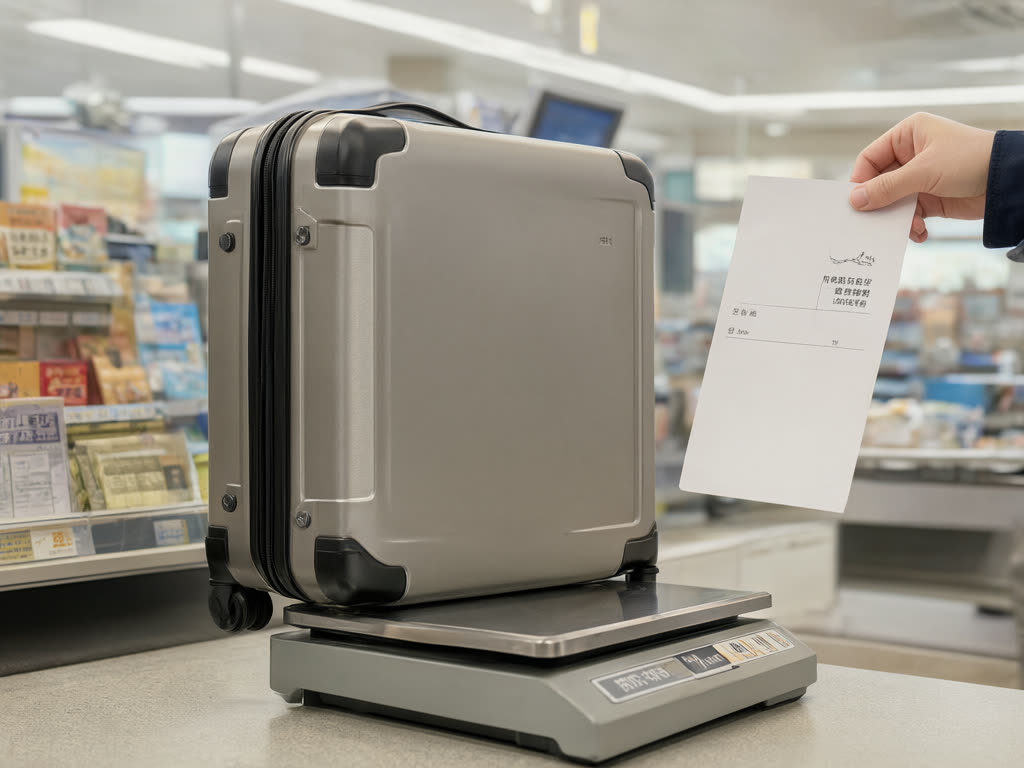
Many konbini act as drop-off points for parcel companies, which is how Japanese travellers send bags ahead to a hotel or the airport (takkyubin). 7-Eleven and FamilyMart accept Yamato Transport's TA-Q-BIN parcels; Lawson and Ministop handle Japan Post's Yu-Pack. Some stores do not offer it, so ask first.
Fill in the waybill at the counter. Staff measure and weigh the bag; price depends on size and distance, and Yamato has offered a small discount for dropping off at a store. To send luggage to an airport, allow at least two days before your flight and check the carrier's deadline. Batteries, spray cans and valuables have restrictions. Your hotel front desk can usually arrange the same service if your Japanese is shaky.
Trash, eat-in and etiquette
Tokyo has very few public bins, and visitors notice it on day one.
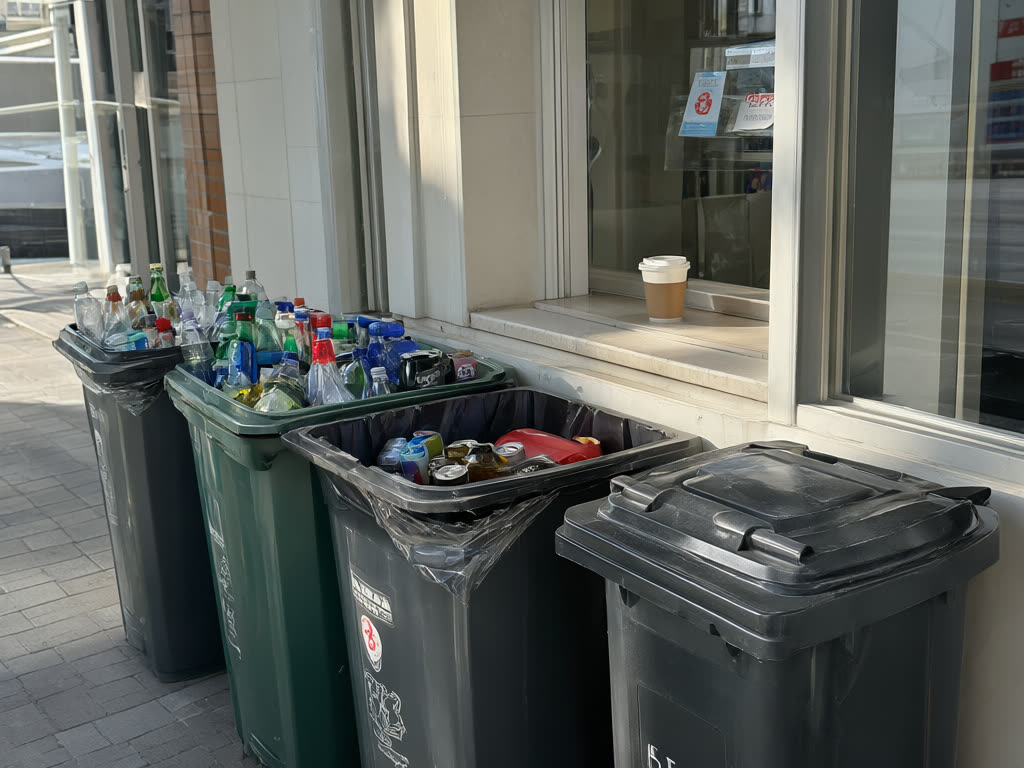
- Konbini bins are for things you bought there. They are often just inside the door, split into burnable, plastic bottles, cans and other plastic. Remove bottle caps and labels where marked. Do not bring household or hotel trash.
- Eat-in counters: many stores have a few seats by the window. If not, eat just outside or at a park. Walking down the street with a fried chicken in your hand is not illegal, but it is unusual.
- Toilets: many stores let customers use the toilet; some close them at night or keep them behind a staff door. Ask politely, and buy something.
- At the till: put your items on the counter or in the tray and wait for the total. Money goes on the small tray, not into the cashier's hand.
- Free Wi-Fi: some chains have ended their in-store Wi-Fi, so do not plan on it.
How konbini fit into a Tokyo day
A konbini breakfast before an early train, an ATM stop before a cash-only ramen shop, a picnic lunch for Inokashira Park in Kichijoji, a hot snack between the lights on a December evening (see Tokyo winter lights). For better meals, our Tokyo food guide has the ranked picks, and the department store food halls in Ginza and Nihonbashi are the step up when you want something special.
The konbini works better with data
Find the nearest store and ATM on a map, translate a label or a ticket-machine menu with your camera, and print a boarding pass from your phone. Install your eSIM before you fly and all of it works the moment you land.
Japan eSIM from ¥480